The election and the elected
Deuteronomy 30:19. I set before you life or death, therefore choose life.
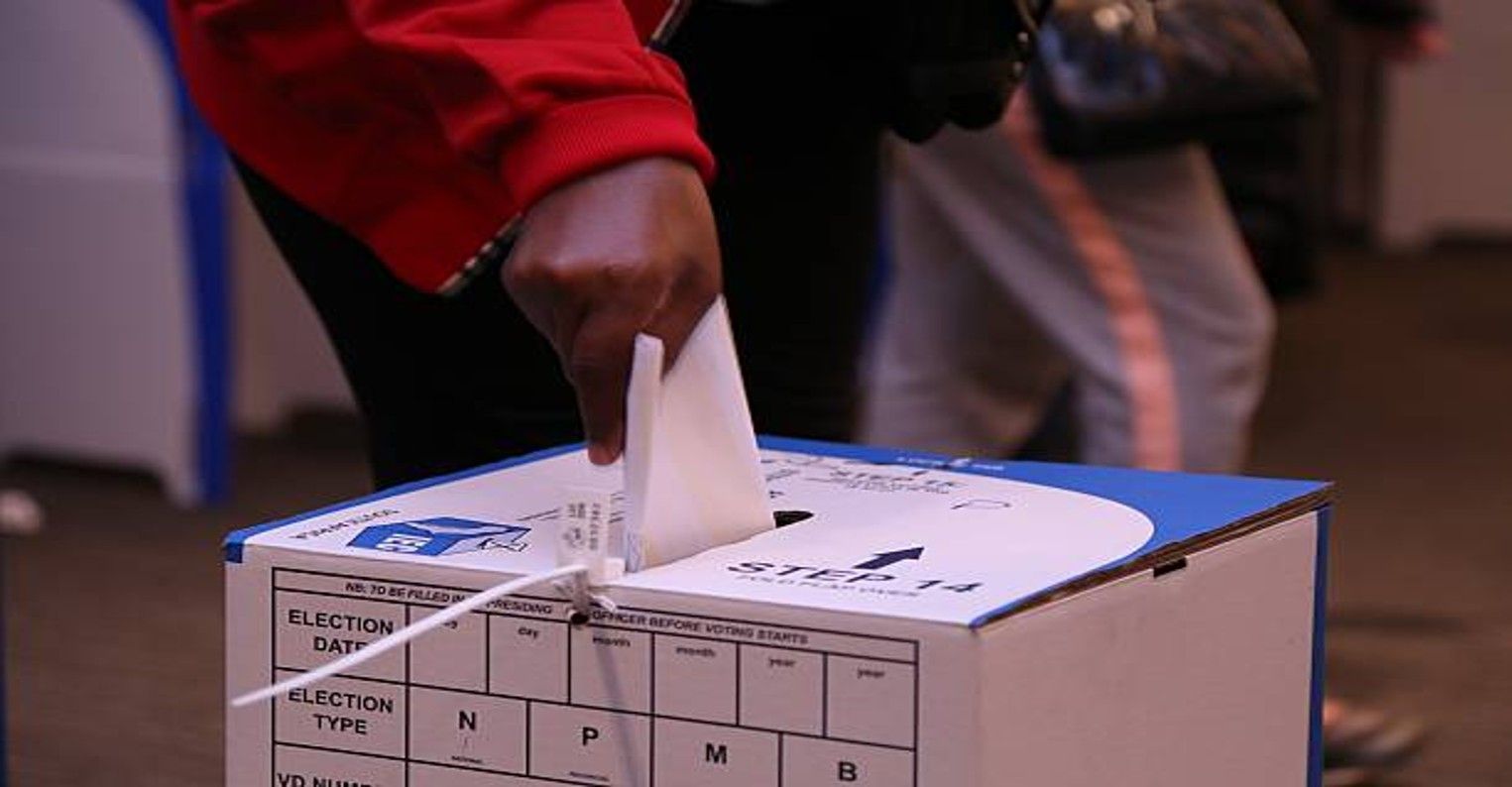
Elections throughout time have shaped the historical landscape of the world. In South Africa, the national election, which takes place every four years, is on the 4th of November 2026. Citizens of South Africa will have the opportunity to vote for their elected candidates. Who gets elected will inevitably determine the policies and legislation that will steer South African through the next few years. The ideologies of the candidates and the parties are diverse. It ranges from the far-left wing to the ultra-conservative.
The far-left wing proposes land appropriation with no compensation, nationalisation of the banking, mining and other sectors and strongly opposes free-market capitalism. On the other side of the continuum, the far-right party strongly opposes, Broad-Based Black Economic Empowerment and land expropriation without compensation.
Three days later, on 7 November 2026, the New Zealand general election is scheduled to be held. Voters will elect 120 members to the House of Representatives under New Zealand's mixed-member proportional (MMP) voting system. It comprises of 71 members elected from single-member electorates and 49 members elected from closed party lists to achieve proportionality. (Currently, there are 123 members). Each voter gets two votes, one for a political party, the party vote, and one for a local candidate, the electorate vote. There are two dominant parties, the Labour Party, rooted in the trade union movements, which focuses primarily on social democracy and social justice. The centre-right National Party emphasizes free-market economics, lower taxes, private enterprise, personal responsibility, and individual achievement.
On the other side of the globe, on the 3rd of November, the mid-term election of the USA will take place. At this point, Republicans control both chambers of Congress. According to an analysis from Chatham house, losing control of even one chamber of Congress—particularly the House of Representatives where Democrats hold momentum—will strip Republicans of their unconstrained authority. This will put a restraint on extension of tax cuts and border controls. The White House will be forced to negotiate, rather than legislate, on federal spending.
The next few weeks will also shape the political landscape of Israel. Israel’s general election is taking place on the 27th October 2026. Among the candidates is a man named Yeshua ben David — his party Gan Eden. Translated this means, Jesus, son of David, from the party, Garden of Eden. Can it be that the election in Israel is also shaping the religious landscape of the future?
It is evident that in each of the elections, be it South Africa, New Zealand, the USA or Israel, the choice of the elected candidates, will impact on every citizen in the country.
The choice of the who rule over a nation, is not a 21st century phenomenon. Approximately 3 500 years ago, the people of Israel, when their leader, Moses, was on the mount of Sinai, chose to build their own god, the golden calve. This act resulted in them wandering in the wilderness for forty years. After their wanderings Moses addressed the people at Arabah on the first day of the eleventh month, in the fortieth year of their wanderings and proclaimed to the Israelites all that the Lord had commanded him. He concluded his address with a choice: “I call heaven and earth to witness against you today, that I have set before you life and death, blessing and curse. Therefore, choose life, that you and your offspring may live”.
Under Joshua’s leadership Israel entered the Promised Land. After his death, they were first ruled by the judges and by the time of Samuel, Israel wanted to be like all nations. They wanted a king to rule them. God did not oppose their choice. God said to Samuel, “Do what the people tell you. They have not rejected you. They have rejected Me. They do not want Me to be their king”, 1 Samuel 8:7. This decision subjected Israel and Judah, for the most part, to rulers who did not walk in the ways of the Lord. The result of this decision was that first Israel and then Judah were exiled to Assyria and Babylon respectively.
Almost six centuries later, the nation of Israel once again faced a choice. Judas’ betrayal of Jesus led to Jesus being taking captive. The chief priests and elders, the Sanhedrin, concluded that Jesus should be put to death. As the Roman Empire had annexed Judea in 63 BC, the ultimate jurisdiction over capital punishment was with the governor of Judea, Pontius Pilate. Pilate, realising that Jesus was delivered out of envy, he, as was the tradition on the Feast of Passover, wanted to release Jesus. Choosing one of the worst criminals, Pilate asked the crowd, “Whom do you want me to release for you? Jesus, Who is called the Christ, or Barabbas? The choice of the criminal, by the name of Barabbas, was divinely appointed. The name Barabbas in Aramaic is בר־אבא. These two words mean son, bar בר and abba אבא, of the father.
Instigated by the chief priests and elders, the rowdy crowd ask that Barabbas, son of the father should be released instead of Jesus, the only Son of the Father. Jesus was led away, beaten and crucified. A man called Joseph from the town of Arimathea made another choice, he gave his tomb to bury Jesus. The crowds went home, the days and nights passed, and on the 3rd day, just as Jesus said, He rose from the dead.
He appeared to many, among whom were the travellers on the road to Emmaus. They did not recognise Jesus at first, and were astonished that the Man walking with them seemed to be ignorant of all that had happened in Jerusalem. After Jesus broke the bread and vanished from their sight, they chose to return to Jerusalem that same night, to tell the disciples that Jesus rose from the dead.
Much persecution followed the newly established church. A Pharisee, from the tribe of Benjamin, was one such man who, because of his fervour for the Jewish faith, led him to view the infant Christian movement as a heretical threat that needed to be eradicated. He went to the high priest to request letters of authority to bring those who followed the Way in Damascus to Jerusalem. Saul however, on his way to Damascus, encountered the risen Christ. He was struck with blindness for three days, and had to be led to the house of Ananias. Here, Ananias, threatened and scared, enquired from the Lord about all the evil that Saul had done. He chose to follow the answer the Lord gave, “Go, for he is a chosen instrument of mine to carry My name before the Gentiles and kings and the children of Israel.” The choice of one man, Ananias, enabled Paul to write 13 letters to the churches in Asia, which is now included in the New Testament.
The question that is asked of every one is, what would be the wise choice to make in these days? Jesus Himself gave the answer.
Jesus said to him, “I am the Way, and the Truth, and the Life. No one comes to the Father except through Me, John 14:6.