The wisdom of foolishness
John 14:6. I am the Way, the Truth and the Life.
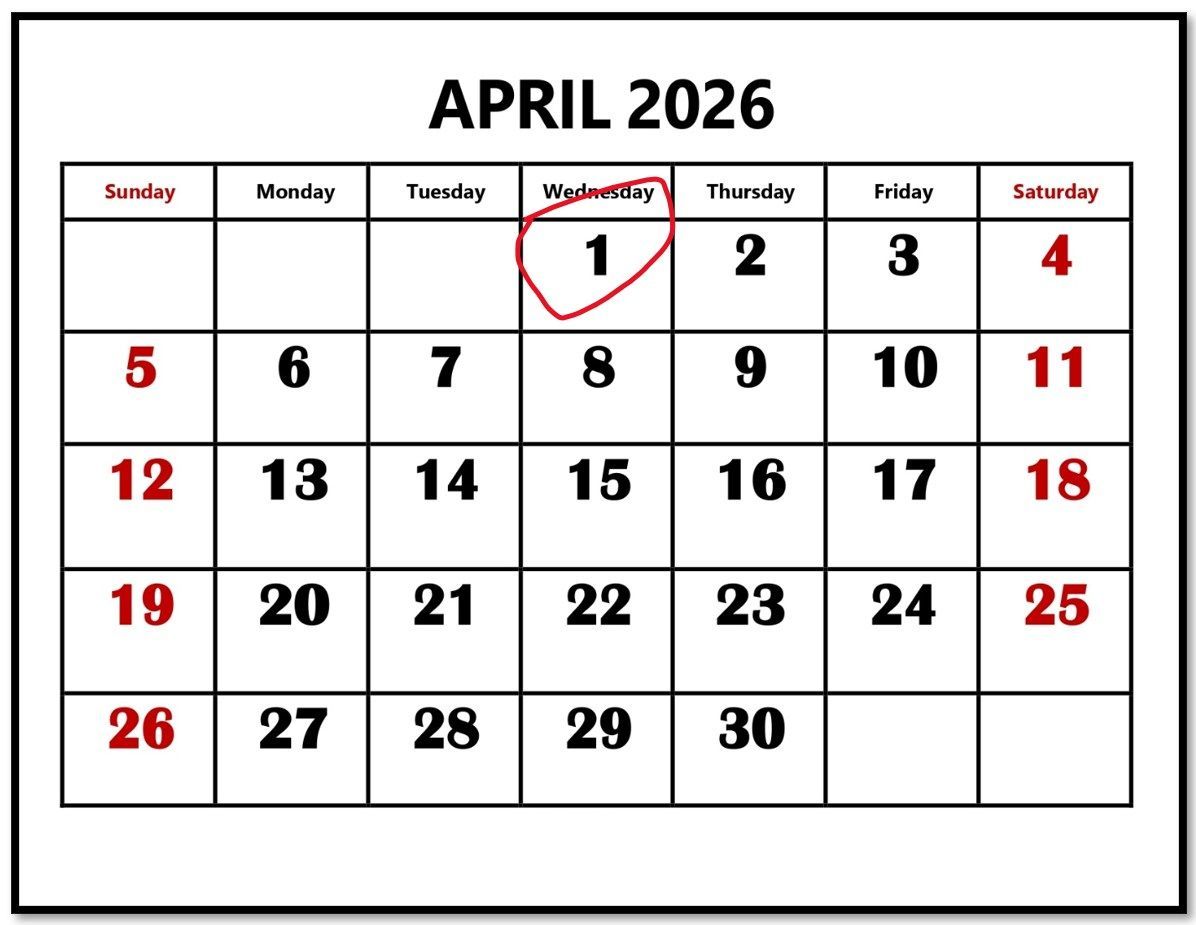
The date circled on the calendar above has for ages been the date that people played pranks on each other. Pranks vary from simple wordplay questions, like the ones below, knock-knock questions, and tricks attempting to catch another person doing something silly.
- Did you hear about the guy who drank invisible ink as an April Fools' prank? He's at the doctor waiting to be seen.
- Why don’t chickens play pranks on April Fool’s Day? They don’t engage in fowl play.
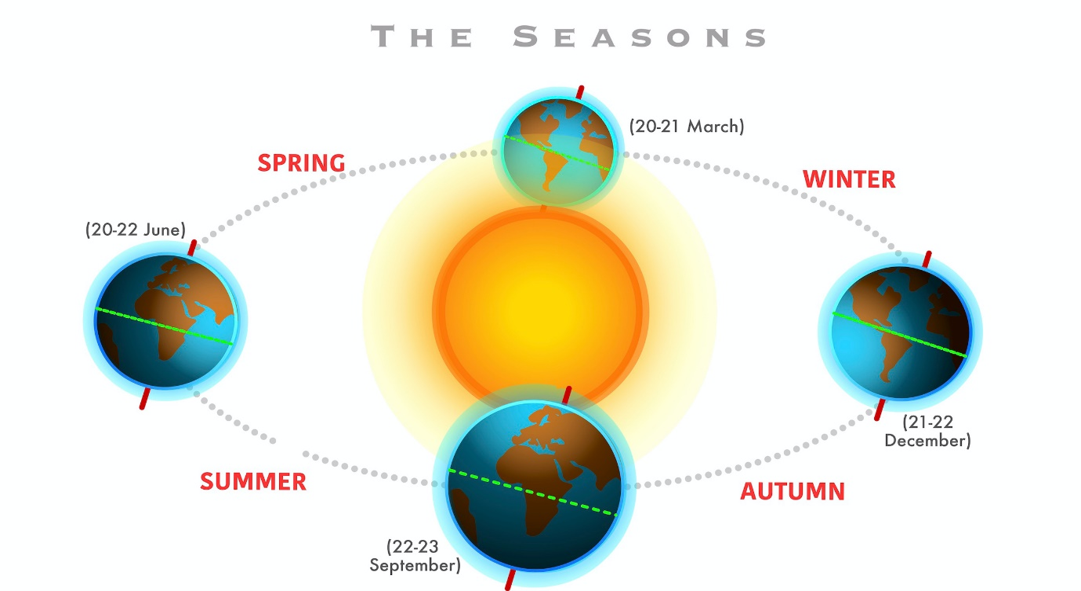
Some historians speculate that April Fools' Day dates back to 1582, when France switched from the Julian calendar to the Gregorian calendar, as was called for by the Council of Trent in 1563. The Julian Calendar, like the Hindu calendar, began a new year with the spring equinox around April 1.
People who were slow to get the news or failed to recognize that the start of the new year had moved to January 1 and continued to celebrate it during the last week of March through April, became the butt of jokes and hoaxes and were called “April fools.” These pranks included having paper fish placed on their backs and being referred to as “poisson d’avril”, April fish, said to symbolize a young, easily caught fish, or a gullible person.
The Merrian Webster’s dictionary defines a fool as a person who acts unwisely or imprudently. One would in the secular world ascribe this behaviour to a person who is often characterized by a lack of good sense, judgement, foresight, or logical reasoning rather than merely a low IQ. Secular definitions focus on practical, day-to-day behaviours that lead to avoidable failure or harm.
Many literary works also feature a person being foolish, for instance Philippa Gregory's novel The Queen's Fool. The book depicts a young Jewish girl on the run from the Inquisition, sworn into the service of the handsome Robert Dudley, who sent her as a Holy Fool to spy on Princess Mary Tudor, the forgotten heir to King Edward’s throne. Queen Mary was the eldest daughter of King Henry VIII and his first wife, Katherine of Aragon. She was a devout Catholic, like her mother. She became queen in 1553. It is said that Mary, through all her tragedies gained no wisdom. The female character of the novel, Hannah, possessed a gift of sight. As a character, she had a unique assignment, to watch the reign of Queen Mary dissolve into a mess.
Queen Mary, despite her father’s disapproval, ascended to the throne on 1 October 1553. Her main objective was to reverse Protestant reforms and restore the religious beliefs to that of Catholicism. Mary is remembered in the 21st century for her vigorous efforts to restore the primacy of Roman Catholicism in England after the rise of the Protestant influence during the previous reigns. She is known as Bloody Mary, for her persecution of the Protestants.
The life of Queen Mary reminds of the words of Jesus in John 16:2 “They will put you out of the synagogues. Indeed, the hour is coming when whoever kills you will think he is offering service to God”. Queen Mary, in her judgement, thought that preserving the Catholic religion, was wisdom. But religion is the not the way to heaven. Whether Catholic, Protestant or any other, there is only one way: Jesus. Jesus said that He is the Way, the Truth and the Life. No one comes to the Father except through Him.
Jesus called the rich man in Luke 12:20 who stored up many riches and decided to relax and enjoy his life, a fool. Jesus also told the parable of the ten virgins. He illustrated that believers should always have their lamps filled with oil, a picture of the Holy Spirit. Failing to do so results in foolishness, Matthew 25:1-13.
Jesus, in the parable of the builder, labelled anyone who hears His words but does not act on them as a "foolish man" building on sand, Matthew 7:26. His words to Nicodemus explicitly stated that salvation is universal to everyone who believes in Him. “ In the biblical narrative, not acknowledging that there is a God, is foolishness, “The fool says in his heart, ‘There is no God’”, Psalm 14:1. And God sent His Son, so that whosoever believes in Him, will not perish, but have eternal life.
The Jewish Passover 2026 starts at sundown on Wednesday, April 1, April fool’s day. It is on this day that Jesus became the Passover Lamb. Jesus ate this meal with His disciples and at the Last Supper confirmed that He would take the sin of world upon Him by laying down His life. This, to His Jewish audience, would not have conformed to their expectations of the Messiah.
However, Paul who was a Jewish believer in Jesus, wrote in his letter to the Corinthian church, amidst great opposition: But we preach Christ crucified, a stumbling block to Jews and foolishness to the Gentiles but to those who are called, both Jews and Greeks, Christ the power of God and the wisdom of God, 1 Corinthians 1;23-24. There is still opportunity to make the wise choice and not be a fool.
“Behold, I stand at the door and knock. If anyone hears My voice and opens the door, I will come in and dine with him, and he with Me”, Revelation 3:20.